Willow is the classic European basketry material, and for good reason: a single bush regrows long, straight rods every year, and those rods bend into tight curves once they have been soaked. Before any weaving happens, though, the rods have to be sorted and prepared, and that preparation decides how the finished basket behaves.
Choosing and grading the rods
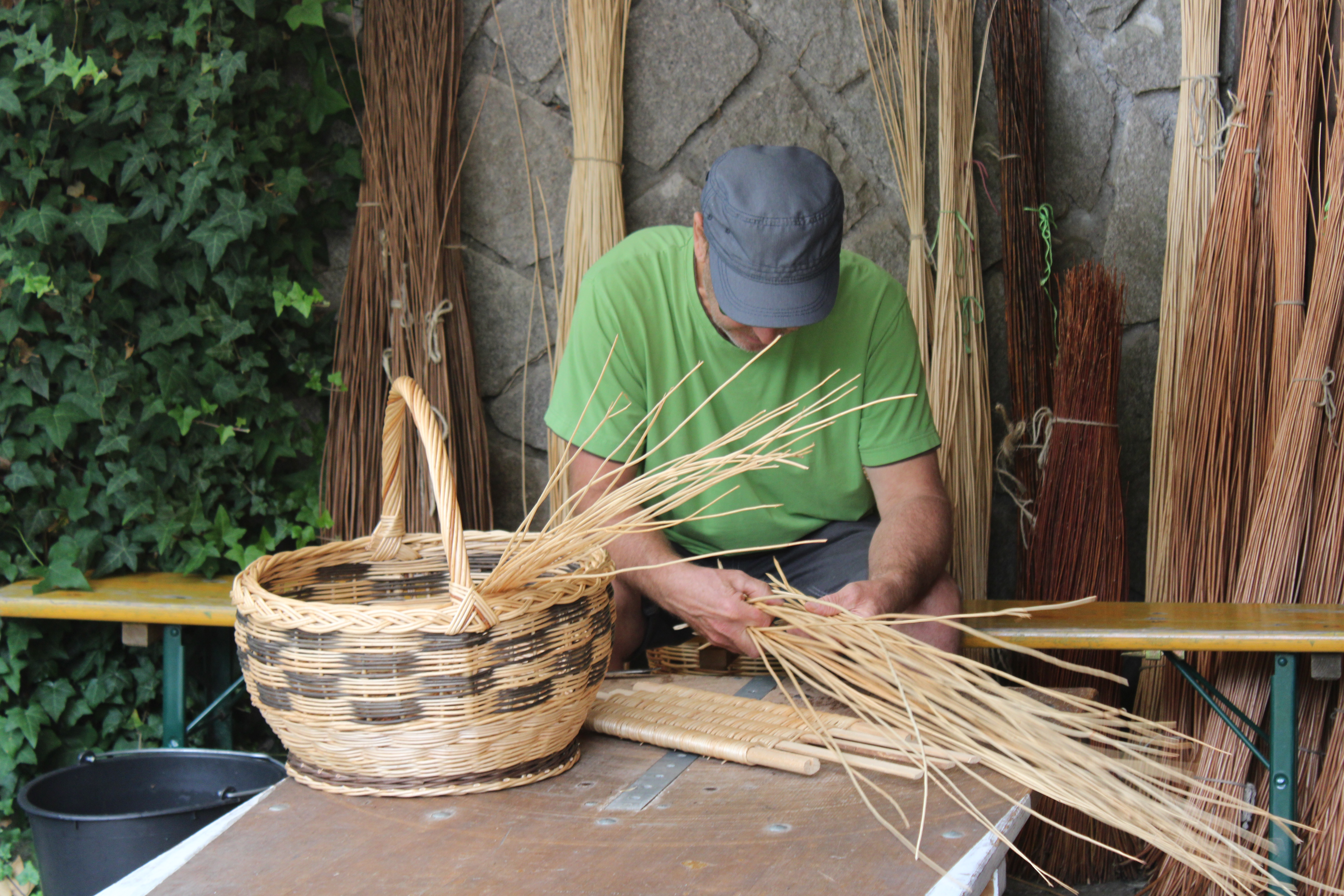
Willow used for baskets is grown as coppice or pollard and cut while dormant, usually in late autumn or winter. After cutting, the rods are graded by length, because a basket needs different lengths for different jobs: thick, long rods for the base stakes, finer rods for the weaving.
When you buy prepared willow rather than growing it, you will usually see it offered in three broad forms:
- Brown willow — dried with the bark left on, giving a natural matte finish.
- Buff willow — boiled before stripping, which stains the rod a warm tan.
- White willow — stripped after sap rises, leaving a pale, smooth surface.
Soaking and mellowing
Dried willow is brittle and will crack if you bend it dry. Soaking returns the flexibility. As a rough guide, finer rods need a shorter soak and thicker rods a longer one; the willow is ready when a rod bends back on itself without the fibres splitting.
After soaking, the rods are wrapped in a damp cloth and left to mellow for a time so that the moisture spreads evenly. Rods that are soaked but not mellowed tend to be wet on the outside and stiff in the core.
Over-soaked willow turns dark, smells sour and loses strength. If rods cannot be used the same day, many makers re-dry them and soak again later rather than leaving them wet.
Setting up the base
Most round baskets start from a slath: short, thick rods slotted through one another in a cross, then bound and opened out like spokes. The first weaving rounds — often a simple pairing weave — lock the spokes in place and set the spacing.
- Pierce the centre of several base sticks and thread others through to form a cross.
- Tie in two fine rods and weave around the cross twice to fix it.
- Separate the spokes evenly and continue weaving outward to the base size you want.
The first side weave
Once the base is flat and firm, upright stakes are inserted beside the base spokes and pricked up to form the walls. From here, a beginner-friendly weave is the randing stroke: a single rod woven in front of one stake and behind the next, all the way around. Worked in even rows, it produces the familiar over-and-under basket wall.
None of these steps require power tools or a large space — a bodkin, a sharp knife, a bucket for soaking and a flat surface cover most of what a first basket needs. The skill is in the rhythm and tension, which is why basketry rewards repetition more than equipment.